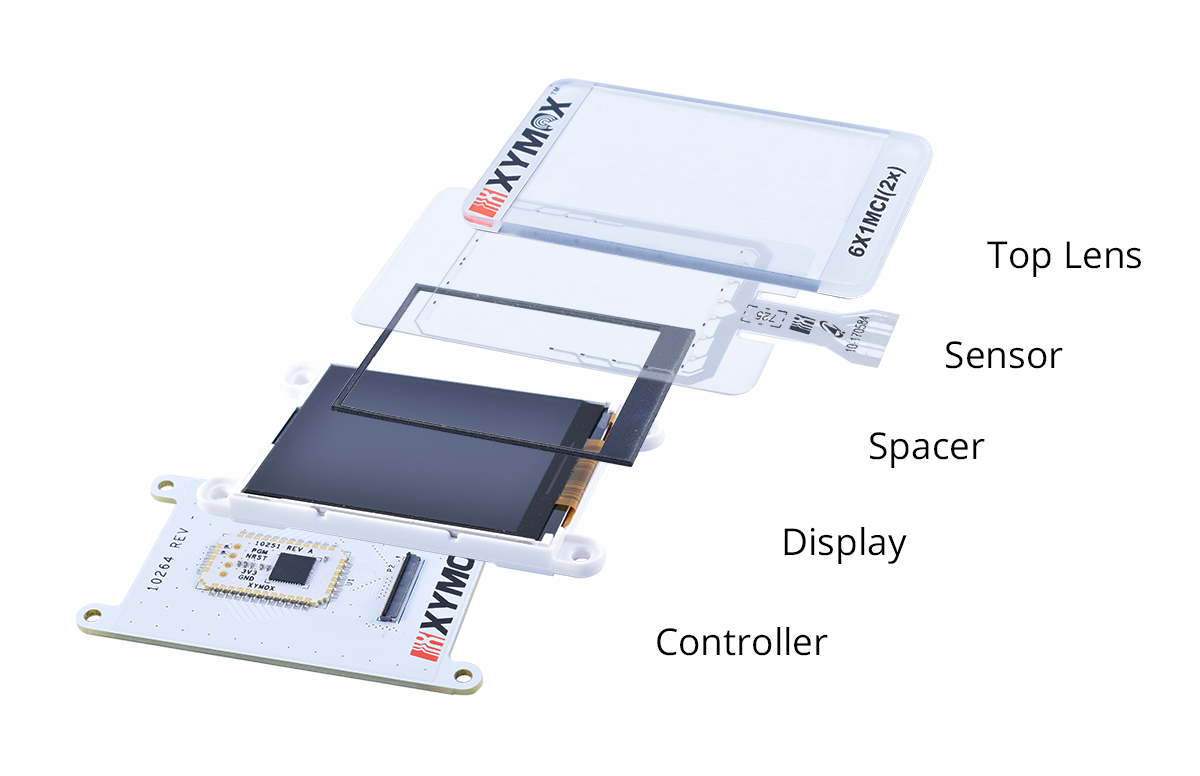
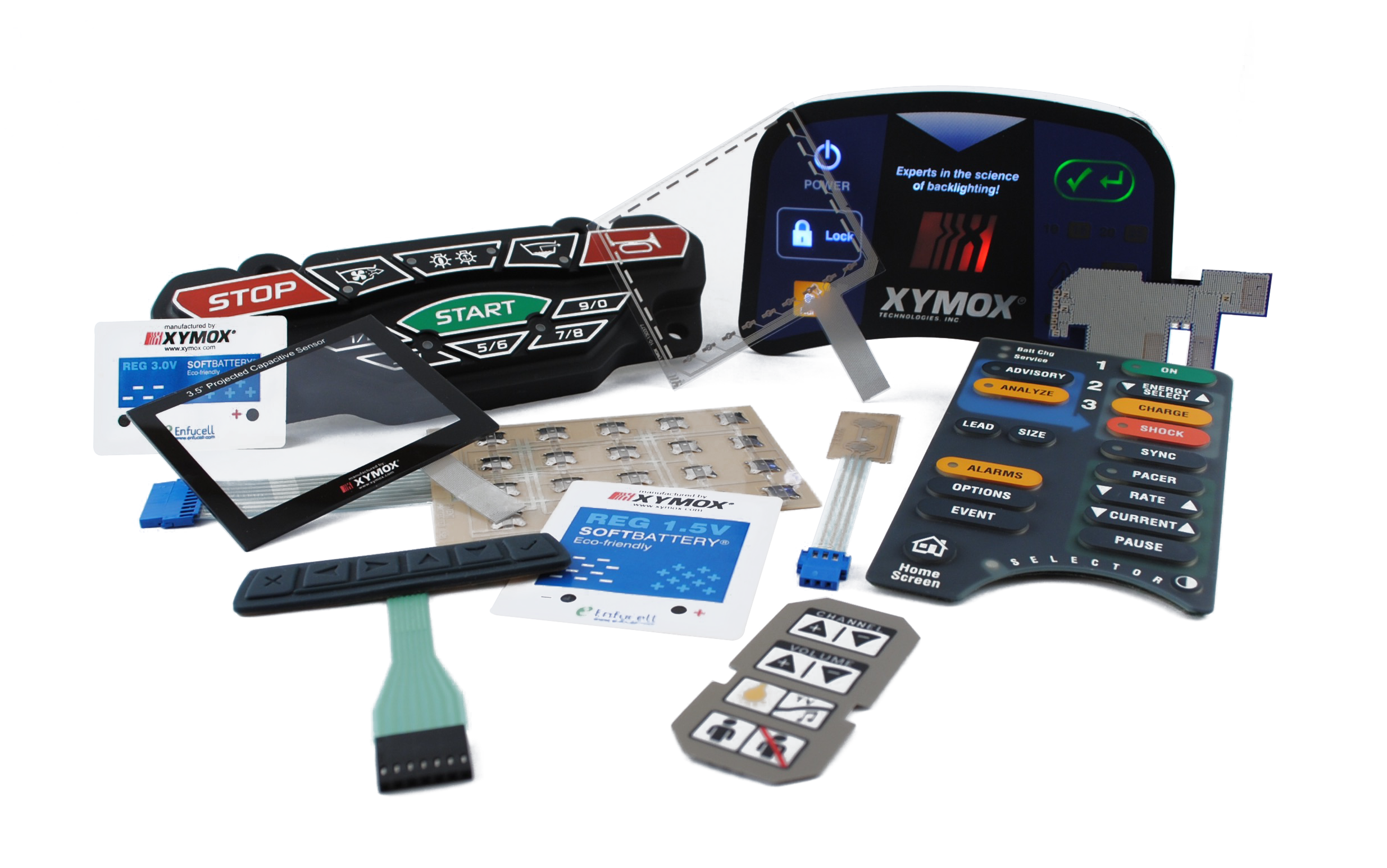
Capacitive sensors are just that – a sensor that senses a change in capacitance. According to Wikipedia, capacitive sensing is a technology that can detect and measure anything that is conductive or has a dielectric different from air. Touch screens detect changes in capacitance that occurs when you touch the screen; they are made with transparent materials to create a crystal clear sensor over a display.
Construction of a Touch Sensor
Touch sensors have a lot of layers; the order and construction of those layers can greatly benefit the overall function and user experience, while also saving money in the long run.
You Asked, We Answered: Adhesives
"What adhesives do you use?"
Answered by Joel Seiden - Product Manager & Design Engineer:
Let’s start at the bottom and work up. For application adhesives we typically use 3M brand adhesives. 3M467, 3M468, 300LSE. We have used these particular adhesives from 3M for many years and we have always had good luck with them. As to which of those we choose, that is usually spec'd out by the customer and is picked because of the type of material (backer, bezel) the part will be stuck too.
For adhesives internal to the part, we expand our usage a bit by not limiting ourselves to only 3M adhesives. We generally put more thought into a specific thickness needed rather than a material adhered to.
For an adhesive to connect a graphic we, again, limit ourselves to either 3M467 or 3M468. This has to do with the compatibility of those adhesives with our graphic inks.
Something relatively new and directly related to our sensors would be the Nitto OCA (optically clear adhesive). Because our sensors need to be clear we needed an adhesive that was equally as clear.

Membrane switches are a tried and true solution but with technologies evolving, so are the ways people touch things. Sure, when you see a button, your first instinct is to push it, this is the reason why membrane switches are great options but have you ever walked up to a screen and touched it, expecting it to do something? Touch sensors are the now and the future of HMIs; they are everywhere.
Touch Sensors: Capacitive vs. Resistive
As you may know that there are two different kinds of touch sensors, capacitive and resistive. It is important to understand the advantages and disadvantages of each before selecting one for your application. Although cost may be a factor, ultimately, it is critical to choose the sensor that works best for the end use of the device.
What are Membrane Switch Connectors?
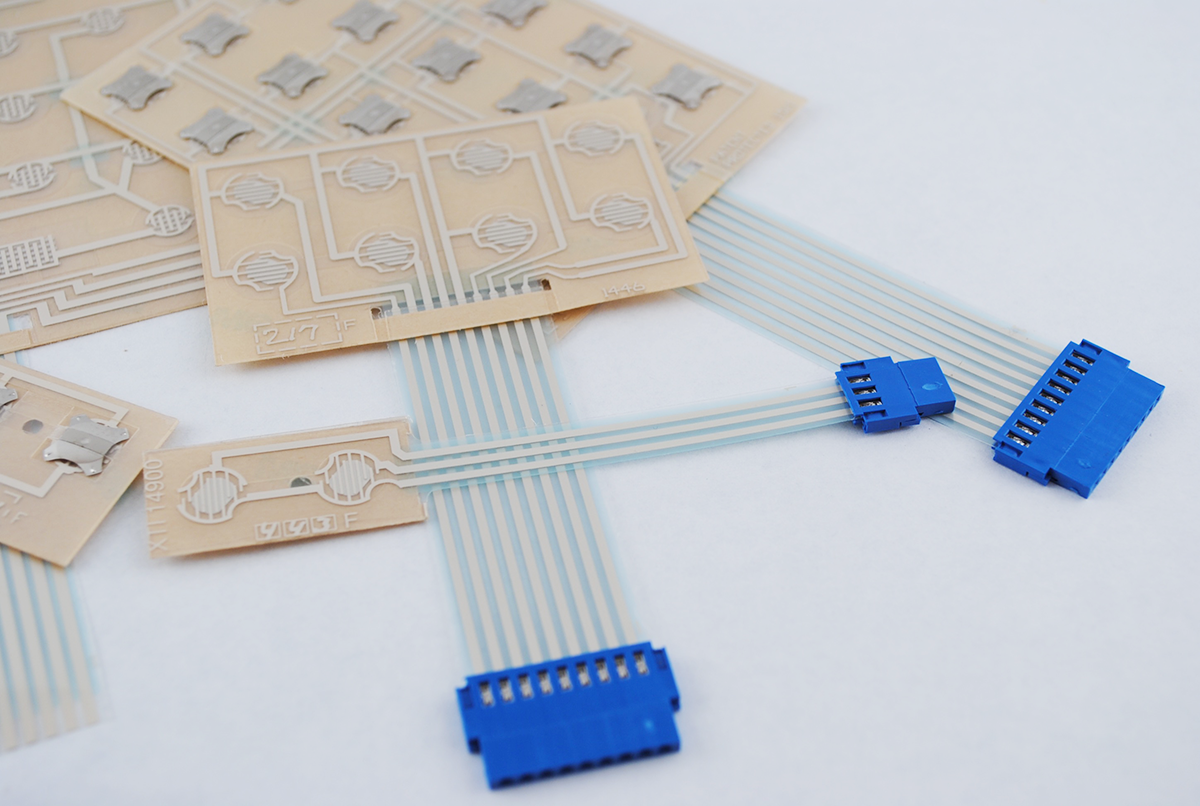
The connector system used on a membrane switch or a sensor assembly is the most critical portion of the machine interface; it attaches the sensor to the circuit board. Without the connection system working correctly the nicest looking switch or most elaborate sensor is useless. The most tried and true connection system is a female type receptacle with a plastic housing, typically on .100” centers. This system is simple but extremely reliable. The housings can also be equipped with a latching/locking mechanism which can serve as a polarization feature, but more importantly, can provide a connection that will not slip or vibrate loose during extreme conditions.
Capacitive Touch Controllers
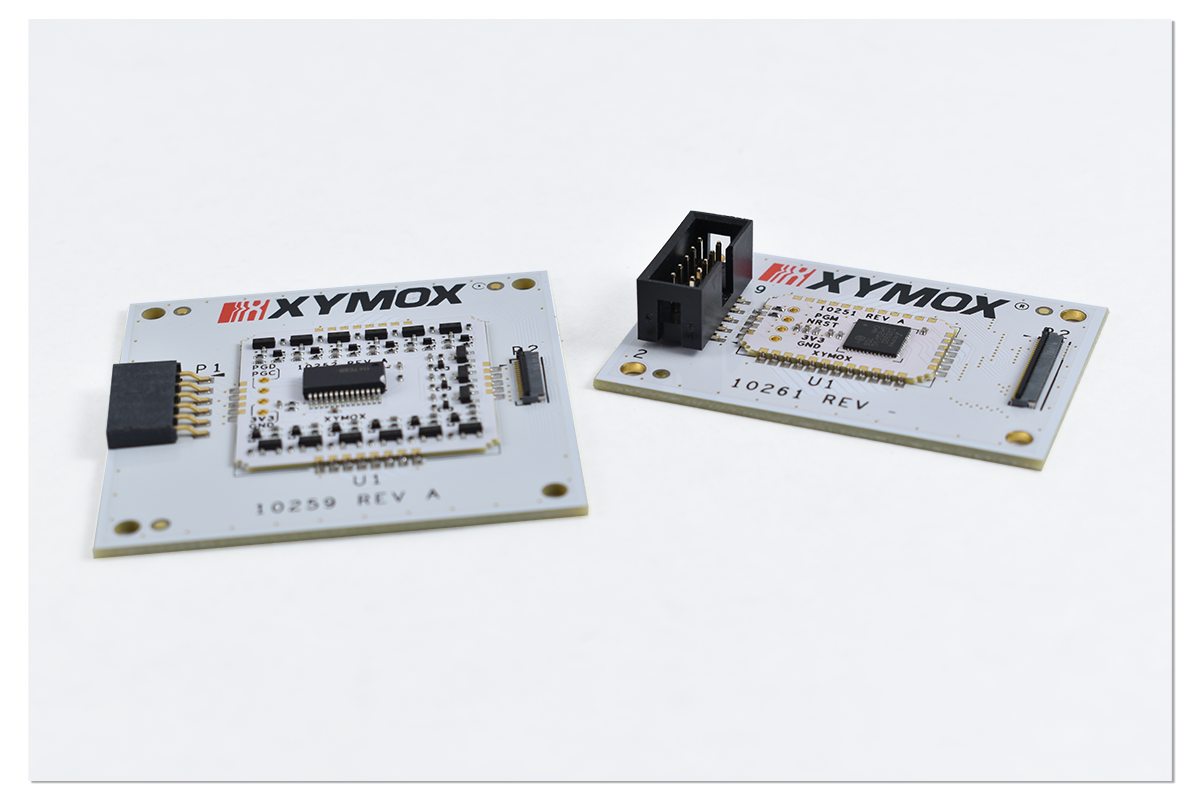
A functional touch sensor requires two things: a sensor and a controller. The touch controller is the brains of the operation.
Polyester is an industry standard and favored, over polycarbonate, for membrane switches.
For circuit layers, polyester is always used since it works best with the higher temperatures that are required for conductive printing. Polyester can be heat stabilized so that it can withstand the urge to shrink during processing.
Mind the Gap
Displays (LCDs, OLEDs, TFTs, etc.) make a lot of noise, electrical noise specifically; and electrical noise can be a challenge for touch screens. So, what is electrical noise and how can you defend against it?
What is a Galvanic Reaction?
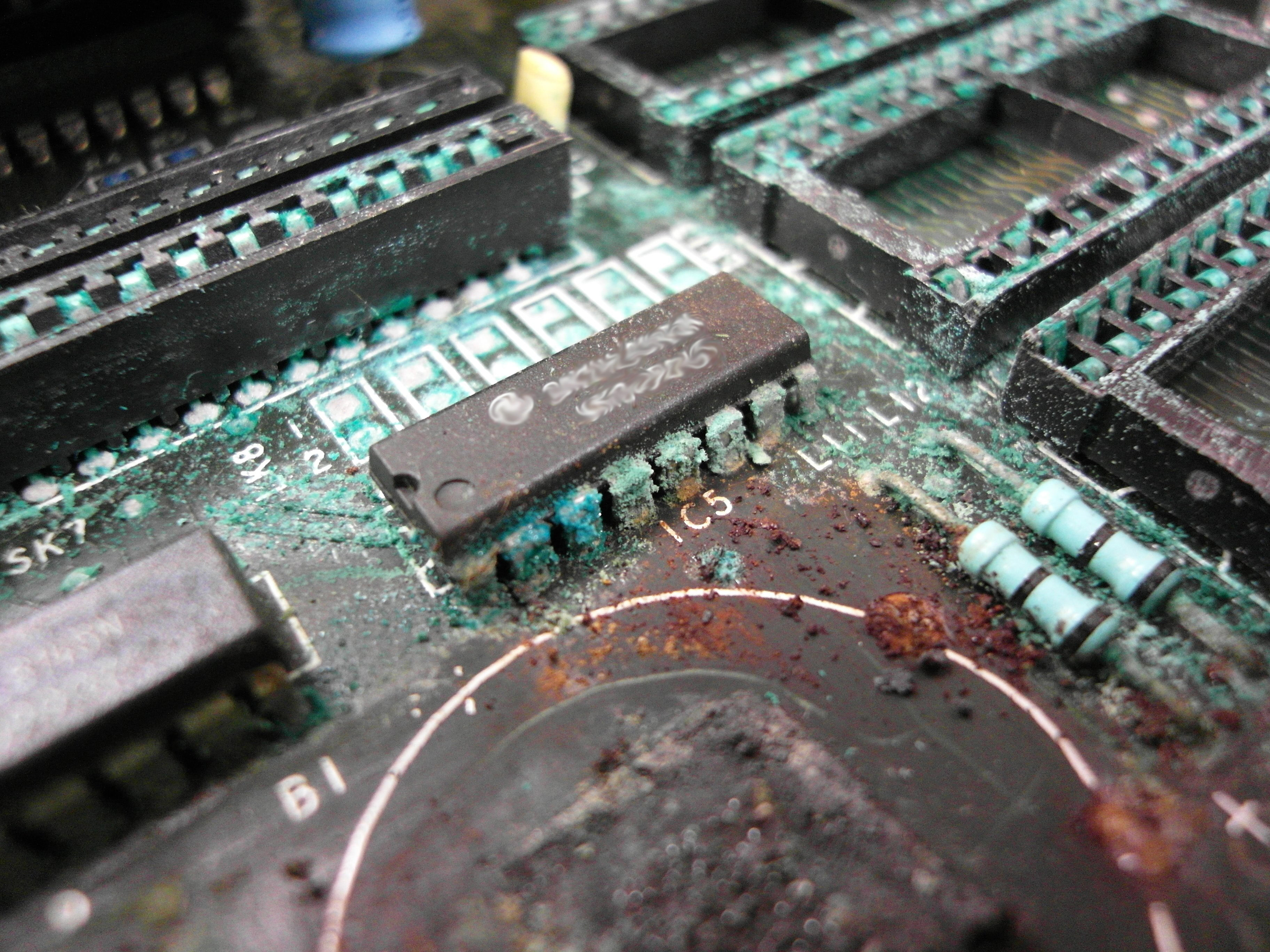
Galvanic reactions occur when two dissimilar metals are in electrical contact with one another which causes one metal to corrode. Noble metals (gold, silver, platinum, palladium) are resistant to corrosion and oxidation. When these metals are mated with more corrosive metals (tin), a Galvanic reaction would occur.